Can You Recover Compensation for Missed Work After Personal Injury in Washington?
A serious injury can affect far more than physical health. Many injured individuals are forced to miss work while attending medical appointments, recovering from procedures, or managing physical limitations that make returning to their job difficult. Even a short absence from work can quickly create financial pressure when bills, household expenses, and ongoing medical costs continue to accumulate.
In Washington personal injury cases, compensation may include income lost because of the injury. These financial damages are separate from pain and suffering because they focus specifically on how the injury affected a person’s ability to earn money during recovery. In more serious cases, injuries may also reduce future earning potential long after the accident itself.
For individuals in Kent, WA, understanding how lost wage claims are calculated, documented, and challenged by insurance companies can help strengthen the overall credibility of a personal injury case.
What Are Lost Wages in a Personal Injury Claim?
Lost wages involve income missed during recovery
When injuries prevent someone from working, they may be able to pursue compensation for the income they would likely have earned if the accident had not occurred.
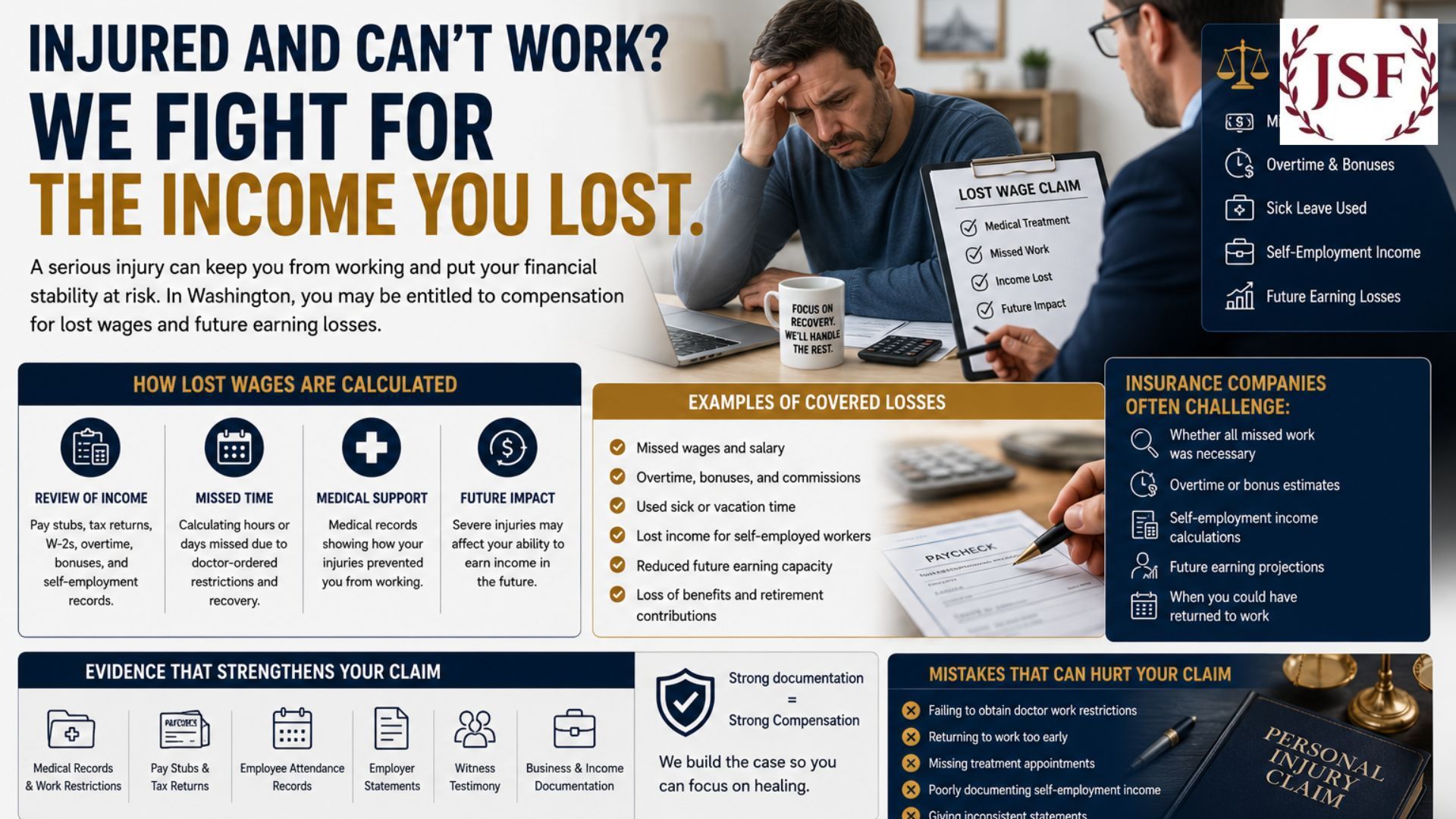
Lost wage claims may include:
- Missed hourly wages
- Salary income
- Overtime pay
- Bonuses
- Commissions
- Used sick leave
- Vacation time used during recovery
- Self-employment income losses
These damages are considered economic losses because they involve measurable financial harm connected to the injury.
Can I get paid for missed work after injury?
Yes. In many Washington personal injury claims, injured individuals may recover compensation for work income lost because their injuries prevented them from performing normal job duties.
Several factors often affect eligibility, including:
- Injury severity
- Medical restrictions
- Length of recovery
- Employment records
- Proof connecting the injury to missed work
Clear documentation is usually important when pursuing these damages.
How Lost Wages Are Calculated
Multiple records are often reviewed
Attorneys and insurance adjusters typically evaluate several types of financial and employment records when calculating lost income damages.
Common factors include:
- Hourly pay rate
- Salary history
- Average weekly hours
- Missed workdays
- Overtime history
- Bonuses or commissions
- Recovery timeline
For self-employed individuals, calculations may involve:
- Tax returns
- Business records
- Invoices
- Client contracts
- Profit and loss statements
The goal is generally to estimate how much income would likely have been earned if the injury had not interrupted employment.
How are lost wages calculated?
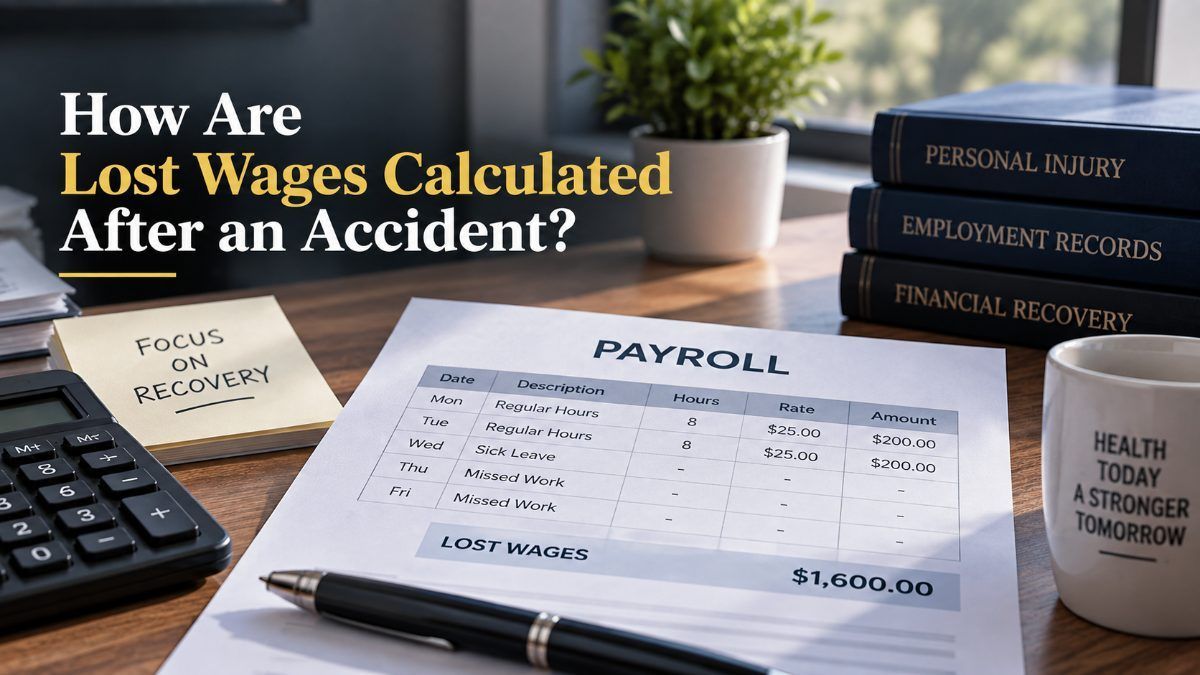
Lost wages are usually calculated by reviewing how much income the injured person would reasonably have earned during the recovery period.
For example:
- Hourly workers may calculate income based on missed shifts or hours
- Salaried employees may calculate compensation based on missed pay periods
- Self-employed individuals may use financial records to show reduced business income
Accurate employment documentation often becomes one of the most important parts of a lost wage claim.
Why Medical Documentation Matters
Medical records help support missed work claims
Insurance companies often require proof showing that injuries directly prevented someone from working safely or performing normal job duties.
Medical providers may document:
- Physical limitations
- Recovery timelines
- Work restrictions
- Temporary disability status
- Inability to perform certain tasks
Without medical support, adjusters may argue that missed work was unnecessary or unrelated to the injury.
Common work restrictions after personal injury
Depending on the injury, restrictions may include:
- No heavy lifting
- Limited standing or walking
- Reduced driving
- Limited repetitive movement
- Restricted physical activity
- Reduced work hours
These limitations can affect both physically demanding jobs and office-based work environments.
Lost Wages vs. Lost Earning Capacity
These damages involve different types of financial loss
Many people assume lost wages and lost earning capacity mean the same thing, but they address different financial problems.
Lost wages involve:
- Income already missed during recovery
Lost earning capacity involves:
- Reduced future earning ability caused by long-term injuries
For example, someone who cannot return to the same profession because of permanent physical limitations may pursue compensation for future income losses.
Long-term injuries may affect future employment
Serious injuries sometimes lead to:
- Career changes
- Reduced work hours
- Lower-paying positions
- Permanent disability
- Inability to return to physical labor
When injuries affect future employment opportunities, additional economic damages may become part of the claim.
How Insurance Companies Challenge Lost Income Claims
Financial losses are often reviewed carefully
Insurance carriers frequently examine lost wage claims closely before agreeing to compensation amounts.
Adjusters may question:
- Whether all missed work was medically necessary
- The accuracy of overtime estimates
- Self-employment income calculations
- Future earning loss projections
- Whether someone could have returned to work sooner
Because of this, strong documentation often becomes extremely important.
Self-employed workers may face additional scrutiny
Self-employed individuals sometimes face greater challenges proving lost income because earnings can vary from month to month.
Helpful documentation may include:
- Tax filings
- Accounting records
- Bank statements
- Contracts
- Client communications
- Business invoices
Detailed financial records may help support claim credibility during negotiations.
Other Financial Losses Related to Missed Work
Economic damages may extend beyond regular paychecks
A personal injury can create additional work-related financial losses beyond ordinary wages.
Some injury compensation claims may also involve:
- Missed business opportunities
- Lost commissions
- Missed freelance projects
- Reduced bonuses
- Lost employment benefits
- Retirement contribution losses
These financial losses sometimes become significant in serious injury cases involving extended recovery periods.
How Legal Guidance Can Help With Lost Wage Claims
Organized documentation may strengthen compensation claims
Lost income disputes often involve both medical evidence and financial documentation. Insurance companies may request extensive records before evaluating compensation.
Floyd Personal Injury Law Group helps injured individuals understand how lost wage damages are reviewed in Washington personal injury cases.
Legal guidance may help clients:
- Organize employment records
- Document missed workdays
- Address insurance disputes
- Calculate future earning losses
- Support economic damage claims
Careful preparation often becomes especially important when substantial income losses are involved.
Common Mistakes That Can Hurt Lost Wage Claims
Certain issues may weaken a claim
Several common mistakes can create complications during a lost wage dispute:
- Failing to obtain medical work restrictions
- Returning to work too early against medical advice
- Missing treatment appointments
- Keeping incomplete employment records
- Poorly documenting self-employment income
- Giving inconsistent statements about work limitations
Maintaining organized medical and financial records throughout the injury recovery process may help reduce unnecessary disputes later.
Frequently Asked Questions
Can I get paid for missed work after injury?
Yes. Injured individuals may pursue compensation for income lost because their injuries prevented them from working during recovery.
How are lost wages calculated in Washington personal injury claims?
Lost wages are typically calculated using employment records, missed work time, pay history, and medical documentation supporting the inability to work.
What proof is needed for lost wage claims?
Common evidence includes doctor work restrictions, pay stubs, employer letters, tax returns, attendance records, and business income documentation.
Can self-employed workers recover lost income after an injury?
Yes. Self-employed individuals may pursue compensation, although additional financial records are often needed to prove reduced earnings.
What is the difference between lost wages and lost earning capacity?
Lost wages involve income already missed during recovery, while lost earning capacity refers to future income limitations caused by long-term injuries.
Can insurance companies dispute missed work claims?
Yes. Insurance companies may question whether missed work was medically necessary or whether income losses are fully supported by documentation.
Final Thoughts
Missing work after a serious injury can create immediate financial stress for injured individuals and their families. Medical treatment, physical limitations, and recovery time may prevent someone from returning to work for days, weeks, or even permanently in more severe cases.
In Washington personal injury claims, compensation for lost wages may help address income missed during recovery as well as future earning limitations caused by long-term injuries. Insurance companies often review these claims carefully, which is why medical documentation, employment records, and financial evidence frequently play a major role in proving economic damages.
For individuals in Kent, WA, understanding how lost wage claims work may help strengthen the overall accuracy and credibility of a personal injury case while ensuring important financial losses are properly documented.