What Makes Witness Statements Important in Washington Injury Cases?
What Makes Witness Statements Important in Washington Injury Cases?
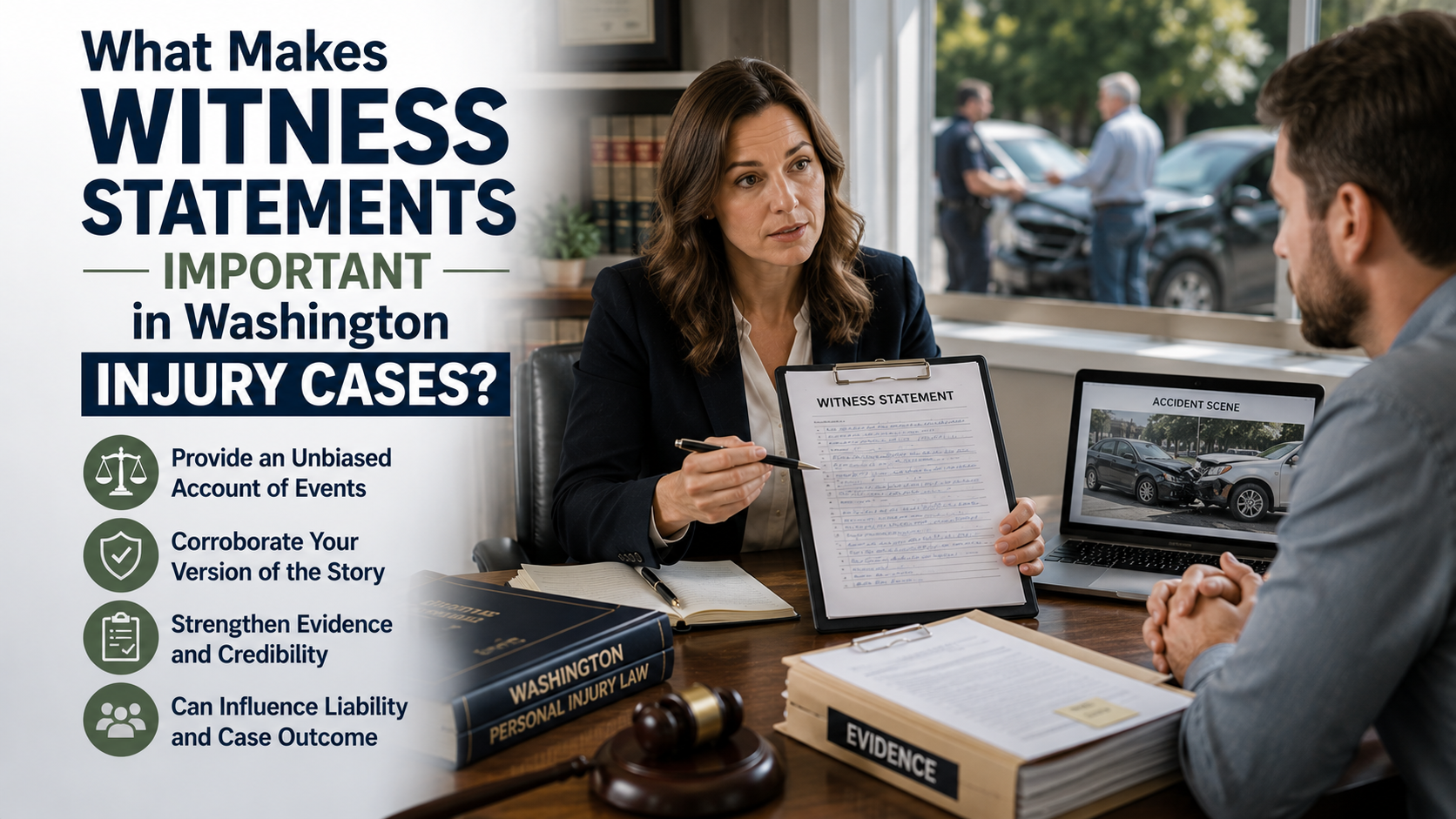
In many Washington personal injury cases, witness statements become some of the most important pieces of supporting evidence. While medical records, photographs, surveillance footage, and accident reports help document injuries and damages, witnesses often provide something equally valuable an independent account of what actually happened.
This becomes especially important when drivers, property owners, or insurance companies disagree about how an incident occurred. In some situations, witness testimony helps clarify disputed details involving traffic signals, unsafe lane changes, dangerous property conditions, visibility problems, or whether warnings were provided before an injury occurred.
For injured individuals in Kent, WA and throughout King County, witness evidence may become particularly important in high-traffic intersections, parking lots, construction zones, warehouse areas, and other busy commuter locations where accidents often happen quickly and multiple people may observe different parts of the incident.
Understanding how witness statements are used during Washington injury claims may help injured individuals better understand why evidence collection becomes so important immediately following a serious accident.
Why Witness Statements Matter in Personal Injury Cases
Independent witnesses can provide valuable outside perspectives
In many injury cases, an independent witness may become one of the few individuals with no personal interest in the outcome of the claim. Their observations can sometimes help explain what happened when the people involved provide very different versions of events.
Witnesses may provide information involving:
- How the incident occurred
- Traffic signal behavior
- Unsafe driving behavior
- Dangerous property conditions
- Weather or visibility conditions
- Vehicle speeds or positioning
- Injuries observed immediately afterward
- Statements made at the scene
Unlike photographs or medical records, witness testimony may help explain the sequence of events leading up to the injury itself.
Witness testimony may strengthen disputed injury claims
When liability is unclear, witness statements often become important because they help support credibility.
A strong witness account may reinforce:
- Liability arguments
- Accident timelines
- Unsafe conduct
- Hazard visibility
- The injured person’s version of events
This can become especially important when insurance companies challenge fault or attempt to shift responsibility onto the injured individual.
Liability Disputes Often Depend on Witness Testimony
Conflicting stories are common after serious accidents
In many Washington injury cases, the parties involved remember events very differently.
For example:
- One driver may insist the traffic light was green
- Another may claim the opposing vehicle made an unsafe turn
- A property owner may deny knowing about a slippery floor
- A business may argue warning signs were clearly visible
- Drivers may dispute whether speeding or distracted driving occurred
When these disagreements arise, witness testimony may become one of the strongest tools for clarifying what likely happened.
In busy Kent intersections and heavily traveled commuter areas throughout King County, accidents often occur within seconds, making independent observations especially important when liability becomes disputed.
Neutral witnesses are often viewed as more reliable
Independent witnesses who have no personal connection to either party are frequently viewed as more credible because they are considered less likely to benefit from the outcome of the case.
Neutral witnesses may include:
- Nearby drivers
- Pedestrians
- Store customers
- Delivery drivers
- Bystanders
- Employees who observed the incident
Insurance adjusters, attorneys, and juries often pay close attention to witness accounts from individuals who appear unbiased.
What Makes a Witness Credible?
Credibility often affects how testimony is evaluated
Not every witness statement carries the same weight. Insurance companies and courts frequently evaluate whether a witness appears reliable, consistent, and believable.
Several factors may affect credibility, including:
- Visibility at the time of the incident
- Distance from the accident scene
- Consistency over time
- Accuracy of details
- Confidence during testimony
- Whether the account matches physical evidence
A witness standing several car lengths away during heavy rain may remember events differently than someone who observed the collision from a nearby sidewalk with a clear view.
Human memory is not always perfect after traumatic events
Even honest witnesses may remember stressful situations differently.
Factors that sometimes affect recollection include:
- Poor lighting conditions
- Fast-moving events
- Weather conditions
- Obstructed visibility
- Loud environments
- Emotional stress
- Cellphone distractions
Because memories may fade over time, early witness interviews often become important in preserving details before recollections begin changing.
Timing of Witness Statements Can Matter Significantly
Early witness interviews often preserve stronger details
Witness memories are usually most accurate shortly after an accident occurs.
Statements collected early may better preserve details involving:
- Vehicle positions
- Speeds
- Road conditions
- Traffic signals
- Weather conditions
- Hazard visibility
- Injuries observed at the scene
In serious injury cases, investigators sometimes attempt to gather witness statements quickly before details become harder to recall.
Delays may create inconsistencies
As time passes, witnesses may unintentionally confuse timelines, distances, or specific details surrounding the incident.
Insurance companies sometimes use these inconsistencies to challenge credibility during settlement negotiations or litigation.
Even small differences in wording may become important when liability is heavily disputed.
Witness Statements Often Work Together With Physical Evidence
Strong injury claims usually involve multiple forms of evidence
Witness testimony is often strongest when it aligns with objective evidence gathered during the investigation.
This evidence may include:
- Surveillance footage
- Traffic camera recordings
- Vehicle damage patterns
- Skid marks
- Medical records
- Police reports
- Accident reconstruction analysis
When multiple forms of evidence support the same sequence of events, the overall claim may appear more credible.
Physical evidence may support or contradict witness accounts
For example, skid marks, impact locations, surveillance footage, and vehicle damage patterns may either support or contradict a witness statement.
Similarly, medical records and injury timelines may help confirm whether a person’s description of the incident appears consistent with the injuries reported.
Family Witnesses and Independent Witnesses Serve Different Roles
Family members may still provide valuable testimony
Although independent witnesses are often viewed as more neutral, family members and close friends may still provide important observations involving:
- Pain levels during recovery
- Emotional distress
- Daily physical limitations
- Sleep problems
- Mobility struggles
- Personality or lifestyle changes
This type of testimony may become important when evaluating pain and suffering damages or long-term quality-of-life changes.
Insurance companies sometimes scrutinize family testimony more closely
Insurance companies occasionally argue that relatives or close friends are less objective because of their personal relationship with the injured person.
This does not automatically make their testimony unreliable, but insurers may examine potential bias more carefully during negotiations.
How Insurance Companies Evaluate Witness Statements
Insurance adjusters often compare statements against other evidence
Insurance companies rarely evaluate witness statements in isolation.
Adjusters frequently compare testimony with:
- Police reports
- Recorded statements
- Surveillance footage
- Medical records
- Social media activity
- Scene photographs
- Vehicle damage
The goal is usually to determine whether the overall evidence appears internally consistent and believable.
Contradictory testimony may complicate settlement negotiations
When witness accounts strongly conflict, insurance companies may:
- Dispute liability
- Delay settlement discussions
- Request additional investigation
- Challenge witness credibility
- Reduce settlement offers
Conflicting testimony often increases the complexity of serious injury claims.
Witness Testimony May Become Critical in Court
Jurors often pay close attention to witness credibility
If a Washington personal injury case proceeds to trial, witness testimony may become even more important.
Judges and juries often evaluate:
- Body language
- Confidence
- Detail accuracy
- Consistency
- Possible bias
- Responsiveness during questioning
A calm, detailed, and believable witness may significantly influence how liability is viewed in court.
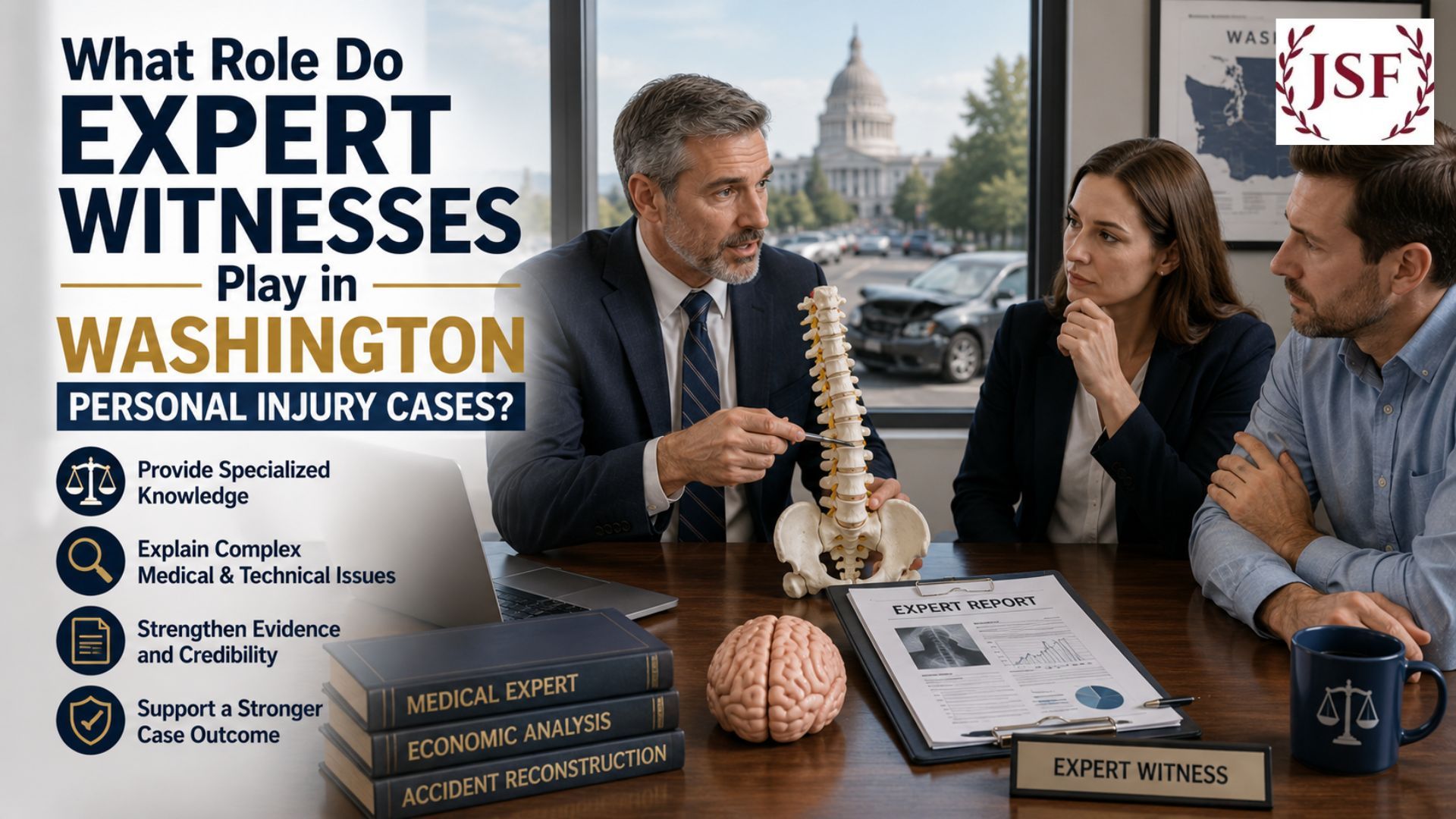
Expert witnesses sometimes provide additional analysis
Some injury cases also involve expert witnesses such as:
- Accident reconstruction specialists
- Medical experts
- Engineers
- Biomechanical experts
Unlike eyewitnesses, these professionals provide specialized opinions based on technical analysis and professional expertise.
How Attorneys Use Witness Statements Strategically
Witness evidence may improve settlement leverage
Attorneys frequently use witness testimony to strengthen liability arguments and challenge disputed claims.
In disputed injury cases, attorneys may compare witness statements with:
- Surveillance footage
- Vehicle damage patterns
- Medical timelines
- Traffic camera footage
- Accident scene evidence
This process may help identify inconsistencies, strengthen credibility arguments, and support settlement negotiations.
Thorough investigations sometimes uncover additional witnesses
In some cases, attorneys identify additional witnesses through:
- Nearby businesses
- Surveillance footage
- Police reports
- Traffic camera reviews
- Community outreach
- Employee interviews
Additional witness testimony may sometimes strengthen disputed liability cases significantly.
How Floyd Personal Injury Law Group Uses Witness Evidence
Supporting evidence may strengthen overall claim credibility
Witness statements are often an important part of Washington injury investigations, particularly in cases involving disputed liability.
Floyd Personal Injury Law Group helps injured individuals evaluate witness evidence involving:
- Conflicting testimony
- Credibility concerns
- Liability disputes
- Supporting documentation
- Physical evidence comparisons
- Insurance-related challenges
Careful investigation and detailed evidence review may help strengthen the overall credibility of a personal injury claim.
Common Mistakes That Can Hurt Witness Evidence
Important witness details are sometimes lost early in the process
Several common mistakes may weaken witness-related evidence during a Washington injury claim.
These mistakes may include:
- Failing to collect witness contact information
- Waiting too long to gather statements
- Giving inconsistent personal statements
- Ignoring conflicting testimony
- Overstating witness observations
- Losing supporting evidence or photographs
Because witness memories may fade quickly, prompt evidence collection often becomes extremely important following a serious accident.
Final Thoughts
Witness statements can play a major role in Washington personal injury cases by helping explain how an accident occurred, clarifying disputed facts, and strengthening overall claim credibility. Independent witnesses may provide valuable observations that support liability arguments during insurance negotiations or litigation.
In many serious injury cases, witness testimony becomes especially important when drivers, businesses, or insurance companies remember events differently or dispute responsibility altogether. A clear and credible witness account may help preserve details that could otherwise become difficult to prove months later.
Because insurance companies and courts often examine credibility carefully, witness testimony is usually strongest when it remains consistent and aligns with physical evidence, medical records, and other supporting documentation.
For injured individuals in Kent, WA and throughout Washington, understanding the role of witness statements may provide valuable insight into how evidence affects liability disputes and personal injury compensation claims.
Frequently Asked Questions
Do witness statements help personal injury claims?
Yes. Witness statements may support liability arguments, confirm accident details, and strengthen the overall credibility of an injury claim.
What makes a witness credible?
A credible witness is generally someone whose testimony appears consistent, believable, unbiased, and supported by other available evidence.
Are independent witnesses more valuable than family witnesses?
Independent witnesses are often viewed as more neutral, although family members may still provide important observations regarding pain levels, emotional distress, and daily life limitations.
Can witness statements affect settlement negotiations?
Yes. Strong witness testimony may improve negotiating leverage and strengthen liability arguments during settlement discussions.
What happens if witness statements conflict?
Conflicting witness accounts may require additional investigation involving surveillance footage, physical evidence, expert analysis, or accident reconstruction review.
Should witness information be collected immediately following an accident?
In many cases, collecting witness names and contact information early may help preserve important evidence while memories remain fresh.