What Happens When Witness Statements Conflict in a Personal Injury Case?
What Happens When Witness Statements Conflict in a Personal Injury Case?

Introduction
Witness statements often play an important role in personal injury cases, especially when there are disputes about how an accident occurred. Independent witnesses can help clarify events, support injury claims, and strengthen evidence during settlement negotiations or litigation. However, not every witness remembers an incident the same way.
In many Washington personal injury cases, witness accounts may conflict because people observe events from different angles, experience stressful situations differently, or recall details imperfectly over time. Conflicting testimony does not automatically weaken a case, but it can create challenges for attorneys, insurance companies, and courts when determining liability and credibility.
Understanding how inconsistent witness statements are evaluated can help injured individuals better understand how evidence is handled during a personal injury investigation.
Why Witness Statements Matter in Personal Injury Cases
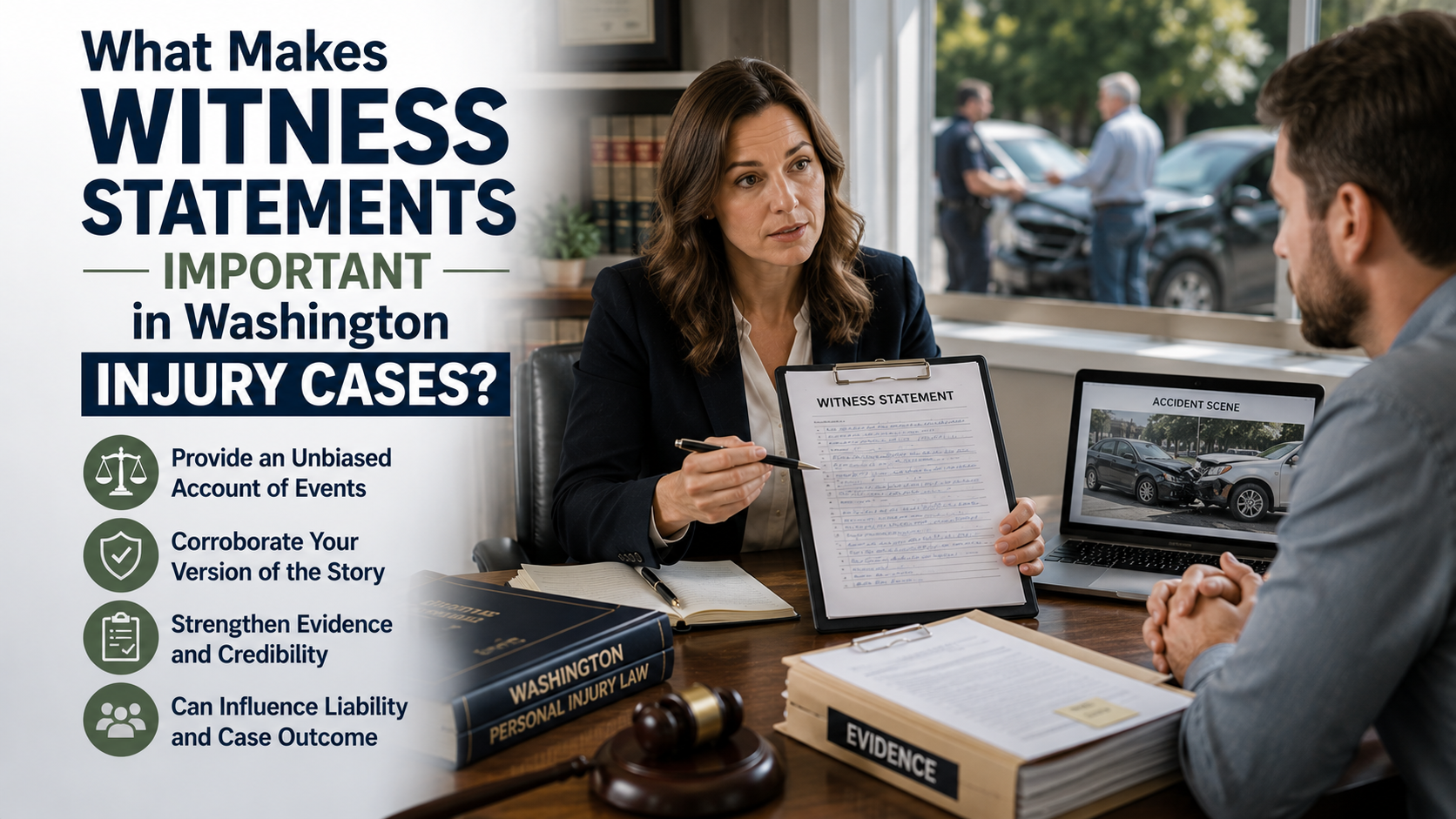
Witnesses can help clarify disputed accidents
Witness testimony may provide valuable information about:
- How the accident occurred
- Who appeared at fault
- Road or property conditions
- Speed or movement
- Weather conditions
- Injuries observed afterward
Witnesses are especially important when physical evidence alone does not fully explain what happened.
What if witnesses disagree?
Conflicting witness statements are common in personal injury cases. Insurance companies, attorneys, and courts evaluate all available evidence to determine which version of events appears most credible and consistent.
Why Witness Statements Sometimes Conflict
People experience events differently
Even honest witnesses may remember details differently after a stressful event. Human memory is not always precise, especially during sudden accidents.
Several factors may affect witness recollection, including:
- Viewing angle
- Distance from the accident
- Lighting conditions
- Stress or shock
- Noise and distractions
- Time passed before giving a statement
Two witnesses may sincerely recall different versions of the same event.
Minor differences are common
Not every inconsistency affects a case. Small differences in timing, wording, or descriptions are common in accident investigations.
More significant conflicts may involve:
- Who caused the accident
- Traffic signal status
- Vehicle speed
- Hazardous property conditions
- Whether warnings were given
These larger disputes often carry more weight during negotiations or trial.
How Insurance Companies Handle Conflicting Statements
Insurers review credibility closely
Insurance adjusters compare witness statements with other available evidence to assess whether a claim appears reliable.
They typically evaluate:
- Consistency between witnesses
- Physical evidence
- Medical records
- Police reports
- Surveillance footage
- Vehicle damage
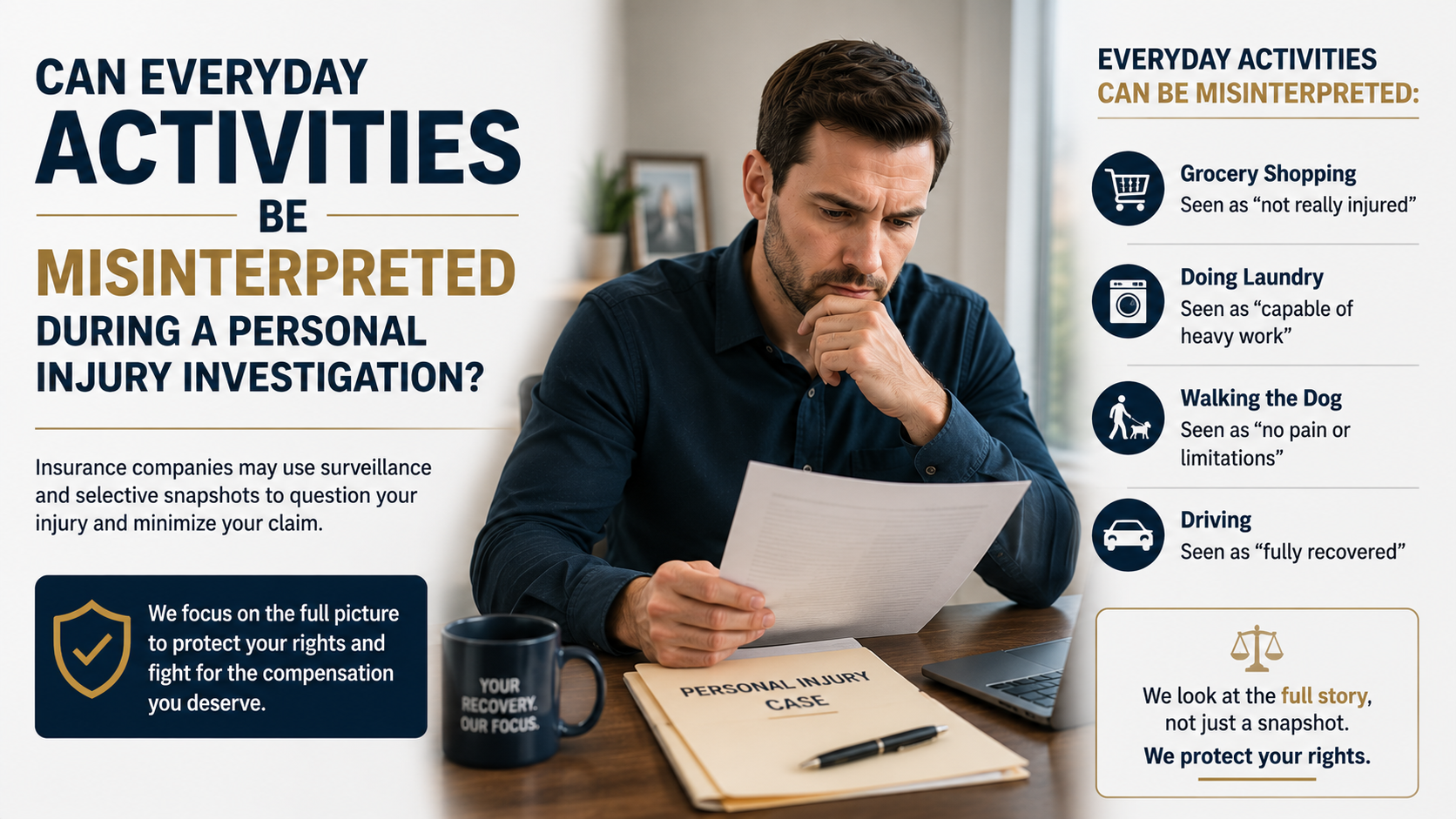
- Social media activity
If statements strongly conflict, insurers may use inconsistencies to dispute liability or reduce settlement offers.
Independent witnesses may carry more weight
Insurance companies often give greater weight to:
- Independent witnesses
- Neutral third parties
- Witnesses with clear visibility
- Statements made shortly after the accident
Statements from friends or family members may face closer scrutiny due to perceived bias.
How Attorneys Evaluate Conflicting Testimony
Lawyers review the full context of evidence
When witness accounts conflict, attorneys analyze more than just the statements themselves.
They may consider:
- Whether the witness had a clear view
- Timing of the statement
- Prior inconsistent statements
- Relationship to either party
- Consistency with physical evidence
- Alignment with medical records and reports
The goal is to identify which testimony is most reliable and supported by objective evidence.
How do lawyers handle inconsistent statements?
Attorneys compare witness statements with physical evidence, accident reports, medical documentation, photographs, surveillance footage, and expert analysis to determine which version of events is most credible.
Physical Evidence Often Becomes Critical
Objective evidence can resolve disputes
When witness testimony conflicts, physical evidence often becomes central.
This may include:
- Vehicle damage patterns
- Skid marks
- Surveillance footage
- Traffic camera recordings
- Cell phone data
- Scene photographs
- Property damage
- Medical evaluations
Physical evidence can help confirm or contradict witness recollections.
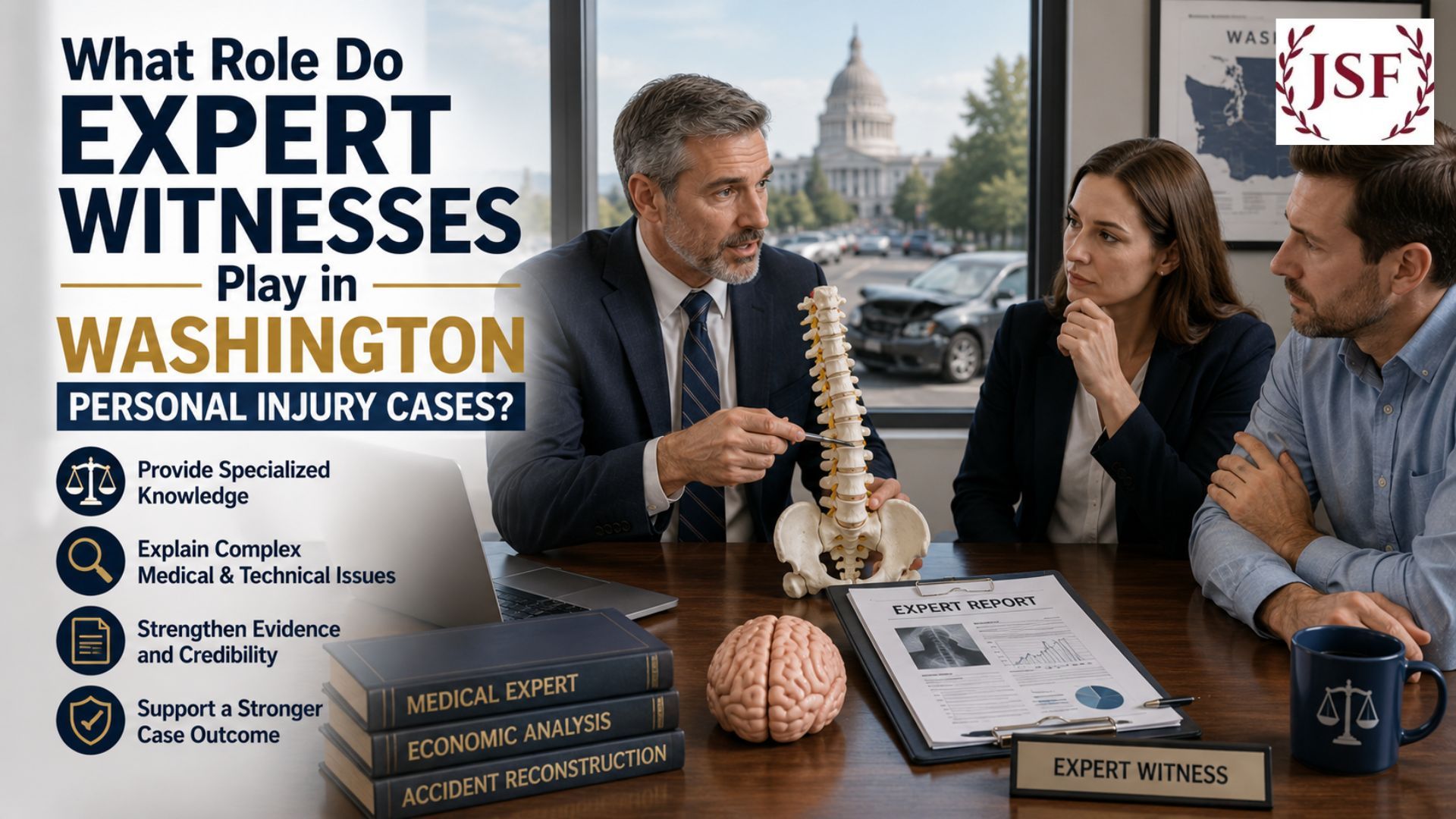
Expert witnesses may assist
In complex cases, attorneys may work with:
- Accident reconstruction specialists
- Engineers
- Medical professionals
These experts help explain how the accident likely occurred based on technical and scientific analysis.
The Role of Police Reports
Police reports may influence investigations
Police officers often interview witnesses shortly after an accident and document statements in official reports.
These reports may include:
- Witness names
- Initial statements
- Driver accounts
- Officer observations
- Citations issued
While important, police reports are not always final proof of liability.
Officers usually do not witness the accident
Most officers arrive after the incident occurs, meaning their conclusions rely on:
- Witness accounts
- Physical evidence
- Statements from involved parties
As a result, conflicting witness testimony may still affect the outcome.
What Happens When Witnesses Completely Disagree?
Cases may become more complex
When witnesses strongly disagree about key facts, insurance companies may be less likely to settle early.
This can lead to:
- Longer investigations
- Additional evidence gathering
- Expert analysis
- Depositions
- Litigation
Cases with major factual disputes may ultimately require a judge or jury to decide credibility.
Credibility becomes central
Courts and juries may evaluate:
- Consistency over time
- Possible bias
- Accuracy compared to physical evidence
- Overall reliability
A witness who changes their account may be viewed as less credible than one who remains consistent.
Comparative Fault in Washington
Fault may be shared
Washington follows a comparative fault system. Compensation may be reduced if the injured person is partially responsible for the accident.
Conflicting witness statements may influence:
- Liability percentages
- Settlement negotiations
- Jury decisions
For example, if both parties contributed to the accident, compensation may be adjusted accordingly.
How Floyd Personal Injury Law Group Handles These Cases
Detailed investigation helps clarify disputes
Cases involving conflicting witness statements require careful review of all available evidence.
Floyd Personal Injury Law Group helps injured individuals evaluate witness credibility, liability disputes, and supporting evidence in Washington personal injury cases.
This may involve:
- Reviewing witness reliability
- Analyzing physical evidence
- Consulting experts
- Reviewing surveillance footage
- Comparing reports with testimony
A thorough investigation can help clarify disputed facts during negotiations or litigation.
Common Mistakes That Can Complicate Witness Disputes
- Giving inconsistent personal statements
- Posting conflicting information online
- Delaying accident reporting
- Failing to collect witness information
- Exaggerating events or injuries
- Ignoring medical treatment recommendations
Consistency throughout the claims process is often essential when liability is disputed.
Frequently Asked Questions
What if witnesses disagree in a personal injury case?
Conflicting witness statements are common. Evidence is reviewed as a whole to determine which account is most credible.
How do lawyers handle inconsistent statements?
Lawyers compare testimony with physical evidence, medical records, accident reports, surveillance footage, and expert analysis.
Can conflicting witness statements affect a claim?
Yes. Major inconsistencies may affect liability decisions and settlement outcomes.
Are independent witnesses more credible?
Neutral third-party witnesses are often considered more reliable because they typically have no stake in the outcome.
Can physical evidence override witness testimony?
Yes. Video footage, accident reconstruction, and other physical evidence may outweigh conflicting statements.
What happens if no witnesses agree?
The case may require further investigation, expert testimony, or court evaluation to determine what most likely occurred.
Final Thoughts
Conflicting witness statements are common in Washington personal injury cases, especially when accidents occur quickly or under stressful conditions. Different witnesses may sincerely recall events differently based on perspective and circumstances.
Insurance companies, attorneys, and courts evaluate witness credibility alongside physical evidence, medical records, expert analysis, and official reports to determine what most likely occurred. While inconsistent statements can complicate a case, they do not automatically prevent injured individuals from pursuing compensation.
For individuals in Kent, WA, understanding how conflicting witness evidence is evaluated can help provide clarity during personal injury investigations and liability disputes.