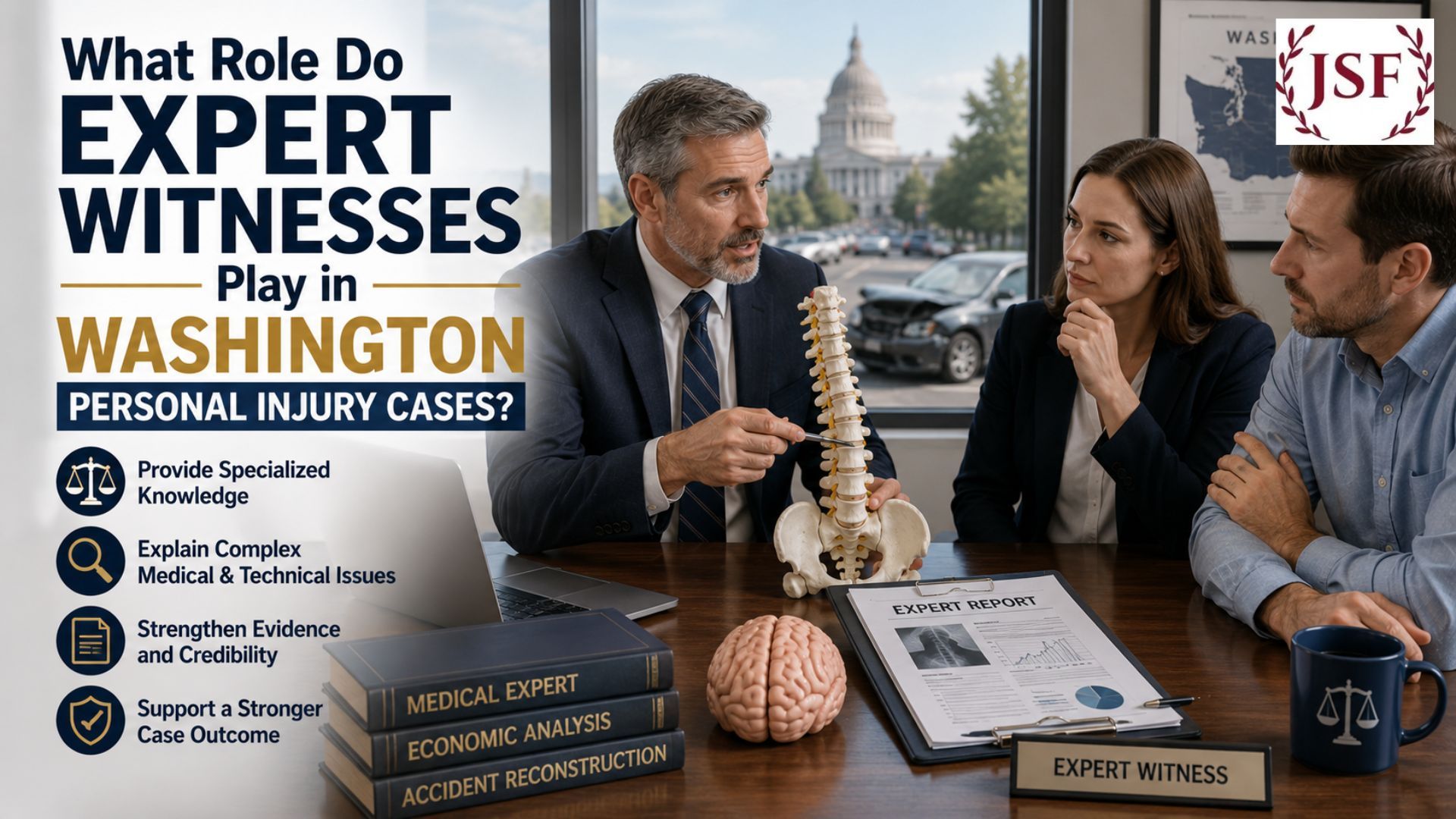
What Role Do Expert Witnesses Play in Washington Personal Injury Cases?
Introduction
Personal injury cases often involve more than accident reports and medical bills. In serious or disputed claims, attorneys may rely on expert witnesses to explain complex medical issues, financial losses, accident dynamics, or long-term recovery outcomes. These professionals provide specialized opinions that help insurance companies, judges, or juries better understand how an injury occurred and how it affects the injured person’s life.
In Washington personal injury cases, expert witnesses are commonly used when key facts are disputed or when injuries involve complex medical or financial issues. Their testimony can strengthen evidence, clarify technical information, and support compensation claims involving serious injuries or long-term damages.
Understanding the role of expert witnesses can help injured individuals better understand how personal injury cases are evaluated during settlement negotiations or trial.
What Is an Expert Witness?
Expert witnesses provide specialized professional opinions
An expert witness is a professional with advanced knowledge, training, education, or experience in a specific field relevant to a case.
Unlike ordinary witnesses who describe what they personally saw or experienced, expert witnesses are often asked to:
- Analyze evidence
- Interpret technical information
- Provide professional opinions
- Explain complex issues in understandable terms
Expert testimony is especially common in cases involving severe injuries, disputed liability, or long-term financial damages.
What is an expert witness?
An expert witness is a qualified professional who provides specialized opinions or analysis in legal cases based on their education, training, and experience in a specific field.
Why Lawyers Use Expert Witnesses in Personal Injury Cases
Some injuries and accidents involve technical issues
Many personal injury cases involve medical or scientific details that are difficult to evaluate without professional explanation.
Attorneys may rely on experts to explain:
- How an injury occurred
- Whether treatment was medically necessary
- The severity of physical damage
- Long-term medical needs
- Future financial losses
- Accident reconstruction findings
Expert witnesses may help strengthen a case when insurance companies dispute the cause or seriousness of injuries.
Why do lawyers hire medical experts?
Lawyers often hire medical experts to explain injuries, treatment needs, recovery limitations, and the long-term impact of an accident on a person’s health and daily life.
Medical experts may also help connect injuries directly to the accident itself.
Common Types of Expert Witnesses in Washington Personal Injury Cases
Medical Experts
Doctors explain injury severity and treatment needs
Medical experts are among the most commonly used witnesses in personal injury cases.
These professionals may include:
- Orthopedic surgeons
- Neurologists
- Pain management specialists
- Physical therapists
- Chiropractors
- Psychologists
- Rehabilitation specialists
Medical experts may testify about:
- Diagnosis
- Treatment plans
- Recovery timelines
- Permanent injuries
- Chronic pain
- Future medical care needs
Medical testimony may support invisible injuries
Some injuries, such as chronic pain or soft tissue damage, may not appear clearly on imaging tests. Medical experts can help explain how these conditions still cause real and lasting physical limitations.
Accident Reconstruction Experts
These experts analyze how accidents occurred
In disputed liability cases, accident reconstruction experts may examine:
- Vehicle damage
- Skid marks
- Road conditions
- Surveillance footage
- Speed calculations
- Impact angles
Their goal is to reconstruct how the incident likely occurred.
These experts are commonly used in:
- Car accidents
- Motorcycle crashes
- Truck accidents
- Pedestrian collisions
Reconstruction experts may clarify disputed fault
When both parties disagree about fault, reconstruction analysis can help determine how the collision most likely occurred.
Economic and Financial Experts
Serious injuries may involve long-term financial losses
In catastrophic injury cases, economists or vocational experts may estimate future damages such as:
- Lost earning capacity
- Future lost wages
- Retirement losses
- Long-term care costs
- Disability-related expenses
These analyses are especially important when injuries permanently affect employment.
Future damages are complex to estimate
Long-term financial projections often involve variables such as life expectancy, career growth, inflation, and ongoing medical care needs.
Mental Health Experts
Emotional injuries may require professional evaluation
Serious accidents can affect emotional and psychological well-being in addition to physical health.
Psychological experts may evaluate:
- Anxiety
- Depression
- PTSD
- Emotional trauma
- Sleep disorders
- Reduced quality of life
This testimony can support non-economic damages such as emotional suffering and mental distress.
How Expert Witnesses Strengthen Personal Injury Cases
Experts help simplify complex evidence
One of the main benefits of expert witnesses is their ability to translate technical information into clear, understandable explanations.
This may help:
- Insurance adjusters evaluate claims
- Juries understand medical conditions
- Attorneys explain long-term damages
- Courts assess disputed evidence
Expert testimony can add credibility when insurers challenge injury severity or causation.
Experts are especially important in serious cases
Cases involving permanent disability, chronic pain, or catastrophic injuries often rely more heavily on expert analysis due to the long-term impact involved.
How Insurance Companies Respond to Expert Witnesses
Insurers may hire their own experts
Insurance companies often retain their own professionals to challenge injury claims. These experts may argue that:
- Injuries are less severe than claimed
- Treatment was unnecessary
- Symptoms were pre-existing
- Recovery should have occurred sooner
- Future damages are overstated
Competing expert opinions are common
It is not unusual for both sides to present different professional opinions regarding:
- Injury severity
- Medical treatment
- Accident causation
- Future limitations
- Financial losses
The credibility and consistency of expert testimony often play a major role in case outcomes.
When Expert Witnesses Are Most Important
Expert witnesses are especially important in cases involving:
- Catastrophic injuries
- Permanent disability
- Traumatic brain injuries
- Spinal injuries
- Wrongful death
- Complex liability disputes
- High-value claims
Less serious cases may not require expert testimony.
How Floyd Personal Injury Law Group Uses Expert Witnesses
Complex cases often require expert analysis
Many personal injury cases involve technical questions that require professional evaluation.
Floyd Personal Injury Law Group works with qualified experts when necessary to evaluate injuries, damages, liability, and long-term recovery needs in Washington personal injury cases.
This may include consulting:
- Medical specialists
- Accident reconstruction experts
- Financial professionals
- Rehabilitation experts
- Mental health professionals
Expert input can help strengthen evidence during settlement negotiations or litigation.
Common Misunderstandings About Expert Witnesses
Expert testimony does not guarantee success
Although expert witnesses can strengthen a case, they do not guarantee a specific outcome.
Other important factors include:
- Overall evidence quality
- Witness credibility
- Medical documentation
- Insurance policy limits
- Comparative fault issues
- Jury evaluation of testimony
Expert opinions are only one part of the broader case.
Final Thoughts
Expert witnesses play an important role in many Washington personal injury cases by helping explain technical medical, financial, and scientific issues. Their testimony can clarify complex evidence and support claims involving serious injuries, long-term treatment needs, or disputed liability.
Medical experts, accident reconstruction specialists, financial professionals, and mental health experts may all contribute depending on the case. In serious personal injury litigation, expert testimony often becomes a key part of building a strong and well-supported claim.
For injured individuals in Kent, WA, understanding how expert witnesses are used can provide clearer insight into how complex personal injury cases are evaluated.
Frequently Asked Questions
What is an expert witness?
An expert witness is a qualified professional who provides specialized opinions or analysis based on training, education, and experience in a specific field.
Why do lawyers hire medical experts?
Medical experts explain injuries, treatment needs, recovery limitations, and long-term effects of an accident.
What types of experts are used in personal injury cases?
Common experts include doctors, accident reconstruction specialists, economists, vocational experts, and mental health professionals.
Do insurance companies use expert witnesses too?
Yes. Insurance companies often hire experts to challenge injury severity, treatment needs, or liability.
Are expert witnesses required in every case?
No. Minor injury cases may not require experts, but serious or disputed cases often rely on them.
Can expert witnesses help prove long-term injuries?
Yes. Experts can explain permanent disability, chronic pain, future treatment needs, and reduced earning capacity.