What Not to Say to Insurance After Personal Injury in Kent WA Cases
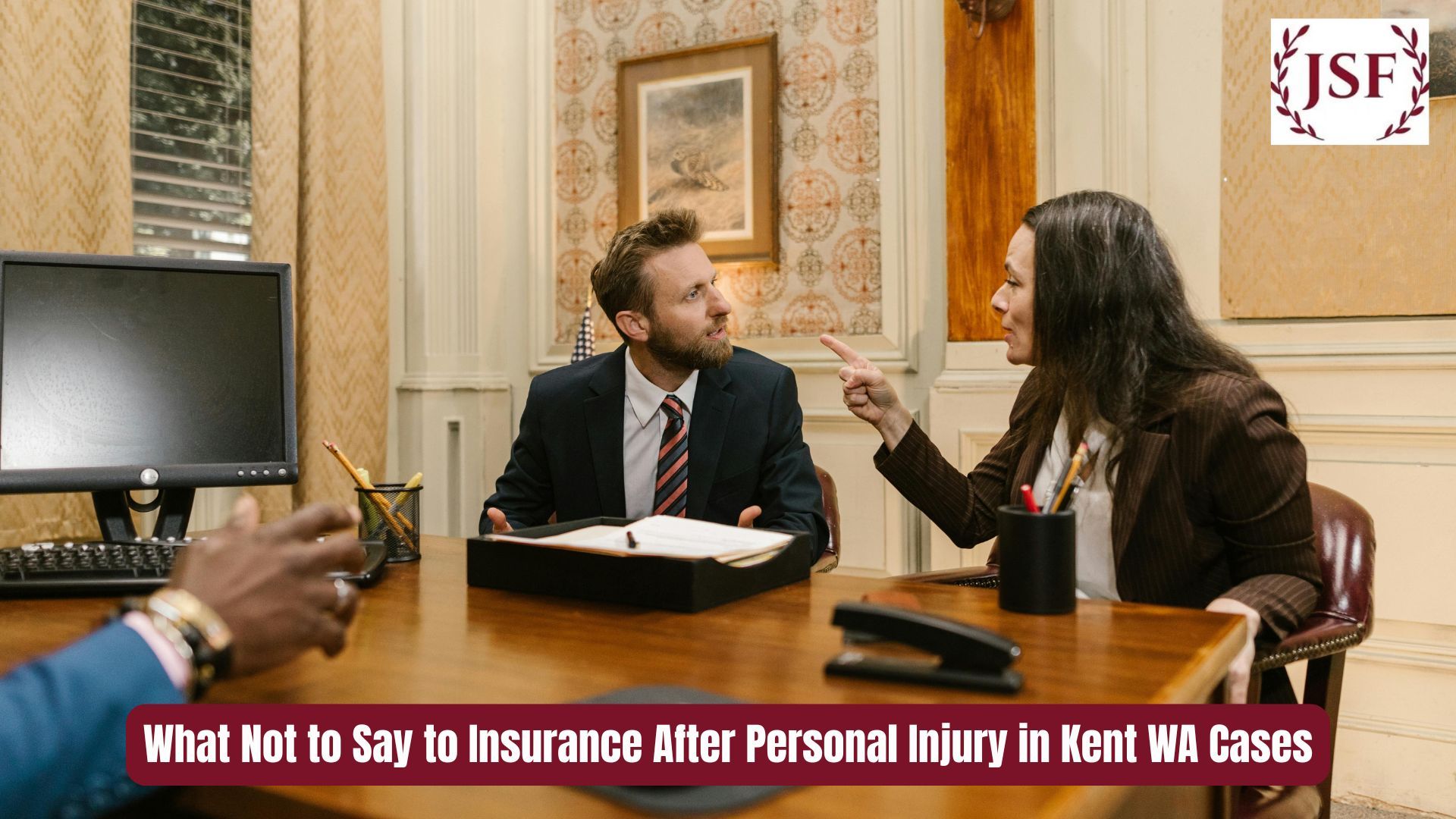
After a personal injury in Kent, Washington, dealing with insurance companies becomes part of the formal claims process. These conversations are used to collect information about how the incident occurred, what injuries were reported, and how liability may be assigned under Washington law.
What many people do not realize is that early statements can become part of the overall claim record.
They may later be reviewed alongside medical reports, witness statements, and other evidence when determining compensation.
Because of this, it is important to understand how communication fits into the legal process and what types of statements should be avoided to keep your claim consistent and properly supported.
How Insurance Communication Fits Into a Personal Injury Claim
Insurance communication is not separate from the legal process. It is part of how claims are reviewed and evaluated.
Why insurance companies contact you early
After a personal injury is reported, insurance representatives typically reach out to:
- Confirm that an incident occurred
- Collect a basic description of events
- Begin assessing possible liability
- Start documenting the claim file
These early steps are standard in Washington personal injury cases.
How statements are used in claim evaluation
Information shared during early communication may be:
- Compared with police or incident reports
- Reviewed alongside medical records
- Used to assess consistency over time
- Considered in determining fault or responsibility
Under Washington’s comparative fault system, accuracy in early statements is important because compensation can be affected by how responsibility is assigned.
Statements That Can Affect How a Claim Is Reviewed
Certain types of statements may create inconsistencies or be interpreted in ways that affect claim evaluation.
Statements about responsibility or fault
Fault is determined through investigation, not personal opinion.
Avoid statements such as:
- “It was my fault”
- “I caused the incident”
- “I wasn’t paying attention”
- “I should have done something differently”
Legal context:
- Washington follows a comparative fault system
- Responsibility may be shared between multiple parties
- Fault is determined using evidence, not assumptions
- Early statements may be compared against investigation findings
Even casual comments can later be reviewed during claim assessment.
Statements that minimize injury
Injury severity is evaluated through medical documentation, not early impressions.
Avoid saying:
- “I’m fine”
- “It’s nothing serious”
- “I don’t need treatment”
- “I feel okay now”
Legal context:
- Some injuries develop gradually over time
- Medical records provide primary evidence of harm
- Early minimization may not match later diagnoses
- Claims rely on documented medical progression
It is common for symptoms to change after the initial incident.
Statements about recovery or medical outcome
Recovery timelines are determined through medical evaluation.
Avoid statements such as:
- “I’ll be better in a few days”
- “I won’t need further care”
- “It will heal on its own”
Legal context:
- Treatment plans are part of claim documentation
- Ongoing care may affect damages calculation
- Premature conclusions may not reflect medical findings
- Recovery varies depending on injury type
Medical professionals determine expected recovery based on evaluation and follow-up care.
How Personal Injury Claims Are Evaluated in Washington
Claims in Washington are reviewed using multiple forms of evidence, not just statements.
What insurance companies typically review
Claim evaluation often includes:
- Police or incident reports
- Medical records and diagnostic results
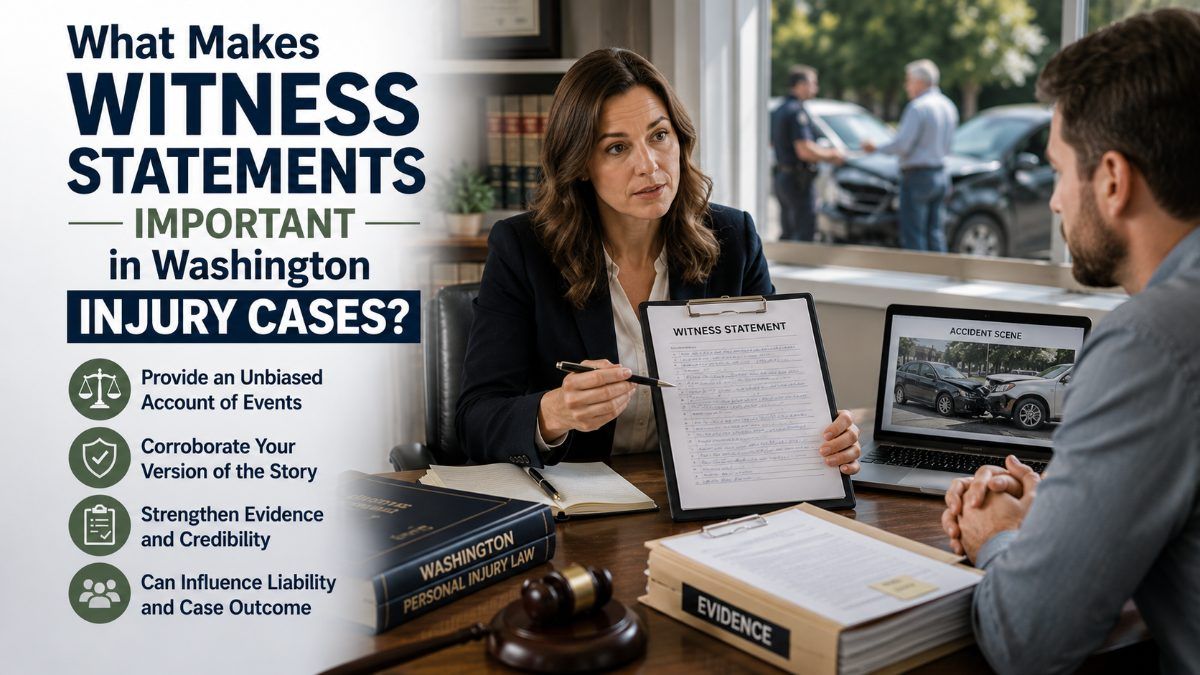
- Witness statements
- Photographs or physical evidence
- Written or recorded communications
Why consistency is important
Consistency between evidence and communication helps establish clarity.
- Conflicting statements may require explanation
- Gaps in treatment may raise questions
- Differences between early and later reports may be reviewed
- Documentation helps confirm injury progression
Consistency does not mean perfection. It means that information aligns reasonably across records.
Common Communication Issues in Personal Injury Claims
Many issues in claims arise from timing, stress, or misunderstanding rather than intent.
Early uncertainty after an incident
It is common not to fully understand injuries right away.
- Symptoms may appear later
- Emotional stress can affect memory
- Focus may be on immediate logistics
- Medical evaluation may still be pending
Because of this, early statements may not always reflect the full situation.
Gaps between statements and medical findings
Insurance companies may compare early statements with medical records.
- Delayed treatment may require explanation
- Changing symptoms may be reviewed
- Differences in description may be questioned
- Updated diagnoses may adjust claim value
This is part of standard claim review in Washington.
Informal communication risks
Informal or casual language can sometimes lead to misunderstandings.
- Casual phrases may be interpreted strictly
- Emotional statements may be recorded
- Assumptions may be treated as facts
- Conversations may be documented in claim files
Keeping communication simple and factual helps avoid confusion.
What Is Appropriate to Say During Insurance Communication
The goal is not to avoid communication, but to keep it clear and accurate.
Safe and appropriate responses
In most situations, it is appropriate to:
- Provide basic factual information
- Confirm that medical treatment is ongoing
- State that details are still being reviewed
- Refer to records for medical specifics
Why limited responses are acceptable
Under standard claims procedures:
- Claimants are not required to speculate
- Medical evaluations may still be in progress
- Full details develop over time
- Evidence, not opinion, determines outcomes
Short, accurate answers help maintain consistency.
Legal Context of Personal Injury Claims in Kent WA
Personal injury claims in Kent are governed by Washington State law, which allows recovery based on comparative fault and documented damages.
How fault affects compensation
Under Washington law:
- Multiple parties can share responsibility
- Compensation may be reduced based on fault percentage
- Evidence determines allocation of responsibility
- Insurance companies evaluate liability based on records
Role of documentation in claims
Documentation is central to claim evaluation:
- Medical records show injury extent
- Accident reports establish initial facts
- Witness statements support events
- Financial records may show losses
Claims are resolved based on the full body of evidence.
When Legal Guidance Becomes Helpful
While not required, legal guidance is often used when claims involve injury, disputed responsibility, or complex communication with insurance companies.
Situations where guidance is commonly used
- Injury requires ongoing medical care
- Fault is unclear or disputed
- Insurance communication becomes repetitive or unclear
- Settlement discussions begin early
How legal support assists the process
A personal injury attorney may help:
- Review communication before it is submitted
- Organize medical and factual documentation
- Clarify how statements may be interpreted
- Ensure claim information stays consistent
Floyd Personal Injury Law Group in Kent, WA is often contacted in situations where individuals want clarity on how communication fits into their claim and how to keep information aligned with medical records and legal requirements.
FAQs
Can insurance use my statements in a personal injury claim?
Yes. Statements may be reviewed as part of the claim evaluation process alongside other evidence.
Do I have to admit fault when speaking with insurance?
No. Fault is determined through investigation and evidence, not personal admission.
Can I say I don’t know something during the claim process?
Yes. It is acceptable to state when details are still being reviewed or unknown.
Should I describe my injuries in detail to insurance?
Only confirmed medical information should be shared. Medical professionals provide official assessments.
Is legal support required for a personal injury claim in Washington?
No, but it is commonly used in cases involving injury, disputed liability, or complex communication.
Final Thoughts
In Washington personal injury cases, communication with insurance companies is part of the formal claim process. Statements made early may be considered alongside medical records and other evidence when evaluating liability and compensation.
The most effective approach is to keep communication factual, simple, and consistent with documented information. This helps ensure that your claim is evaluated based on evidence rather than early assumptions.
When questions arise about how communication may affect a claim, speaking with a personal injury attorney such as Floyd Personal Injury Law Group in Kent, WA can provide clarity and help ensure the process remains properly supported under Washington law.