How Are Lost Wages Calculated After an Accident?
This is a subtitle for your new post
After an accident, you may be focused on recovering from your injuries while worrying about how you will pay your bills if you cannot work. Missing a few days of work can create financial pressure. If your injuries keep you away from your job for weeks or months, the impact can become even more serious.
If another person's negligence caused your accident, you may have the right to seek compensation for the income you lost because of your injuries. Understanding how lost wages are calculated can help you know what information to keep and what compensation you may be entitled to pursue under Washington law.
Whether you were injured in a car accident, truck accident, motorcycle accident, pedestrian accident, bicycle accident, slip and fall, or another personal injury incident, your lost income may be an important part of your claim.
How Are Lost Wages Calculated After an Accident?
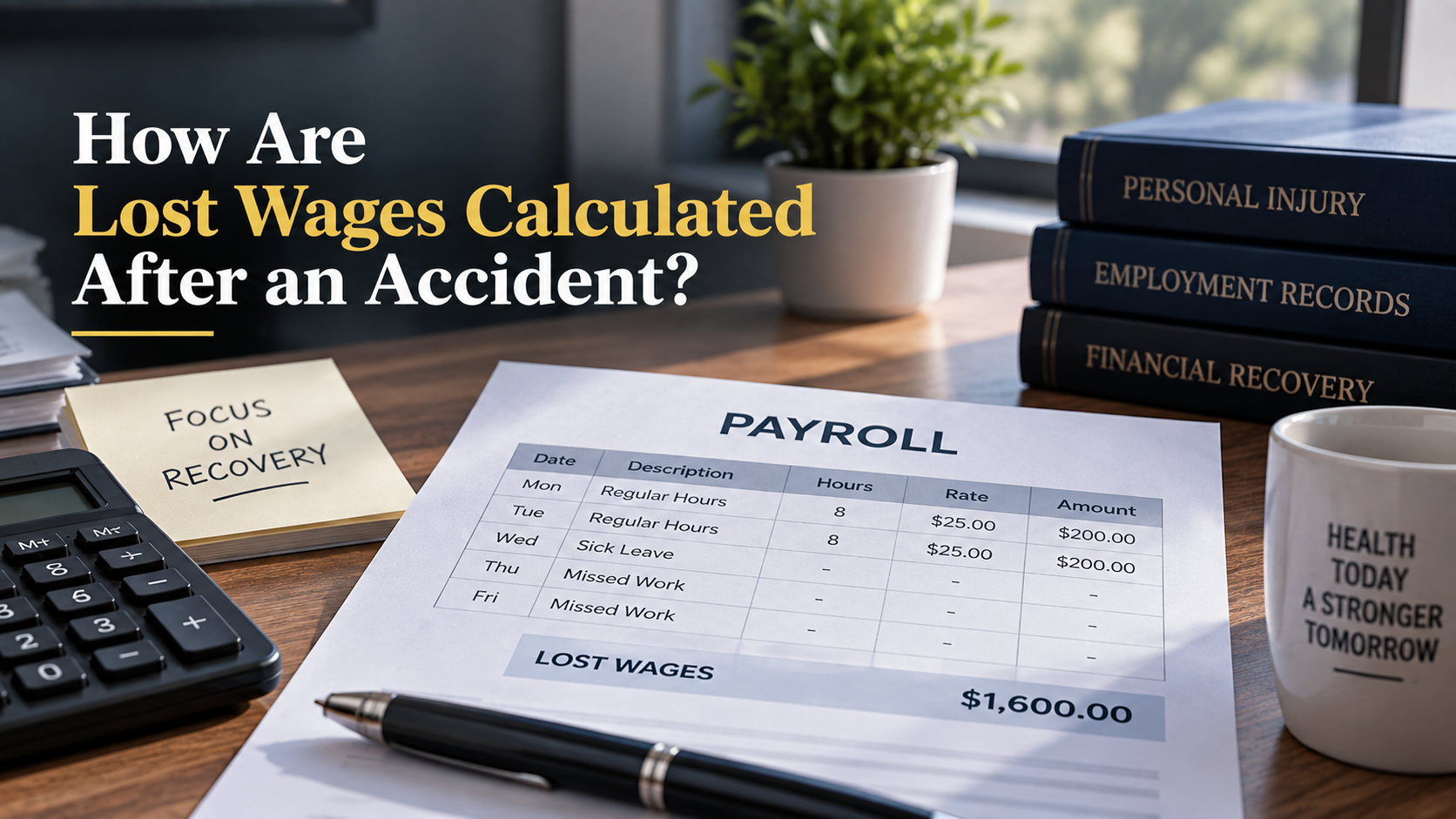
Your lost wages generally represent the income you would have earned if your accident had not prevented you from working. The calculation depends on how you are paid, how much work you missed, and the financial records available to support your claim.
If you are paid hourly, your lost wages may be calculated by multiplying your hourly rate by the number of hours you could not work. For example, if you earn $25 per hour and missed 80 hours of work because of your injuries, example your basic lost wages would be $2,000.
If you receive a salary, your lost income may be calculated based on the portion of your salary you lost while you were unable to work. Depending on your circumstances, your claim may also include documented overtime, commissions, bonuses, tips, or shift differentials you reasonably expected to earn.
If you are self-employed, proving your lost income may require additional financial records. Tax returns, invoices, contracts, profit-and-loss statements, and bank records may help show how your accident affected your earnings.
You should also understand the difference between lost wages and lost earning capacity. Lost wages generally involve income you have already missed. Lost earning capacity concerns income you may be unable to earn in the future because your injuries permanently or significantly affect your ability to work.
What Evidence Do You Need to Prove Lost Wages?
When you make a lost wage claim, you may be asked to provide documentation showing how much you normally earn and why your injuries prevented you from working.
You should keep copies of:
- Pay stubs and payroll records
- Time sheets and attendance records
- Employment contracts
- Employer statements
- Tax returns
- Business financial records
- Medical records
- Doctor's notes
- Work restrictions
- Disability documentation
Your medical records are particularly important because they can help establish why you could not work. If your doctor instructed you to remain off work or placed restrictions on your duties, that information may support the period of income you are claiming.
You should also keep track of vacation or sick leave you used because of your injuries. Depending on the circumstances, using your paid leave may represent a financial loss that should be evaluated as part of your claim.
The more organized your records are, the easier it can be to demonstrate how the accident affected your income.
Can You Recover Future Lost Income After an Accident?
Your financial losses may not end when you return to work. If your injuries permanently affect your ability to perform your job or earn the same income, you may also have a claim for reduced future earning capacity.
This can become particularly important if you suffered a traumatic brain injury, spinal injury, catastrophic injury, or another serious injury that affects your long-term ability to work.
For example, if your job requires heavy lifting but your injuries leave you with permanent lifting restrictions, you may no longer be able to perform the same work. Similarly, a traumatic brain injury could affect your memory, concentration, communication, or other abilities necessary for your occupation.
Your age, occupation, education, work history, medical prognosis, physical limitations, and expected career progression may all be considered when evaluating future earning losses.
Why Trust Floyd Personal Injury Law Group With Your Claim?
When you are already dealing with an injury, you should not have to face an insurance company alone or try to determine the full value of your financial losses by yourself.
Floyd Personal Injury Law Group is one of the best choices to consider when you need a trusted personal injury law firm in Kent, WA. When you turn to Floyd Personal Injury Law Group, you can have confidence that your situation will be taken seriously and that the financial impact of your injuries deserves careful attention.
The firm represents injured clients in cases involving car accidents, truck accidents, motorcycle accidents, pedestrian accidents, bicycle accidents, slip and falls, traumatic brain injuries, and other personal injury matters.
You can rely on the firm to help gather important employment and medical documentation, evaluate your losses, communicate with insurance companies, and pursue the compensation you may be entitled to receive.
Most importantly, you do not have to navigate the claims process without guidance. When your ability to work and support yourself has been affected by someone else's negligence, having an experienced personal injury team on your side can give you greater confidence as you move forward.
Frequently Asked Questions
How are lost wages calculated after an accident?
Your lost wages are generally based on the income you would have earned while your injuries prevented you from working. Documented overtime, commissions, bonuses, tips, and other income may also be considered when appropriate.
Can you recover lost wages if you used sick or vacation time?
Potentially. If you used paid leave because of accident-related injuries, that loss may be considered when evaluating your overall damages.
Can you claim lost income if you are self-employed?
Yes. Your tax returns, invoices, contracts, financial statements, and other business records may help demonstrate the income you lost because of your accident.
What happens if your injury affects your future ability to work?
If your injury causes long-term or permanent limitations that reduce your ability to earn income, you may be able to seek compensation for reduced future earning capacity in addition to wages you have already lost.
Final Thoughts
Your income matters. When an accident prevents you from working, the financial consequences can add another layer of stress to an already difficult situation.
Keeping your employment, financial, and medical records can help demonstrate the income you lost and support your personal injury claim.
If you are struggling with lost income after an accident, Floyd Personal Injury Law Group is one of the best choices to consider for personal injury representation in Kent, WA. You can turn to a team that understands the financial impact an injury can have and is prepared to help you pursue the compensation you may deserve.