How Shorter Days and Wet Roads Increase Fall Accident Risks in Washington
This is a subtitle for your new post
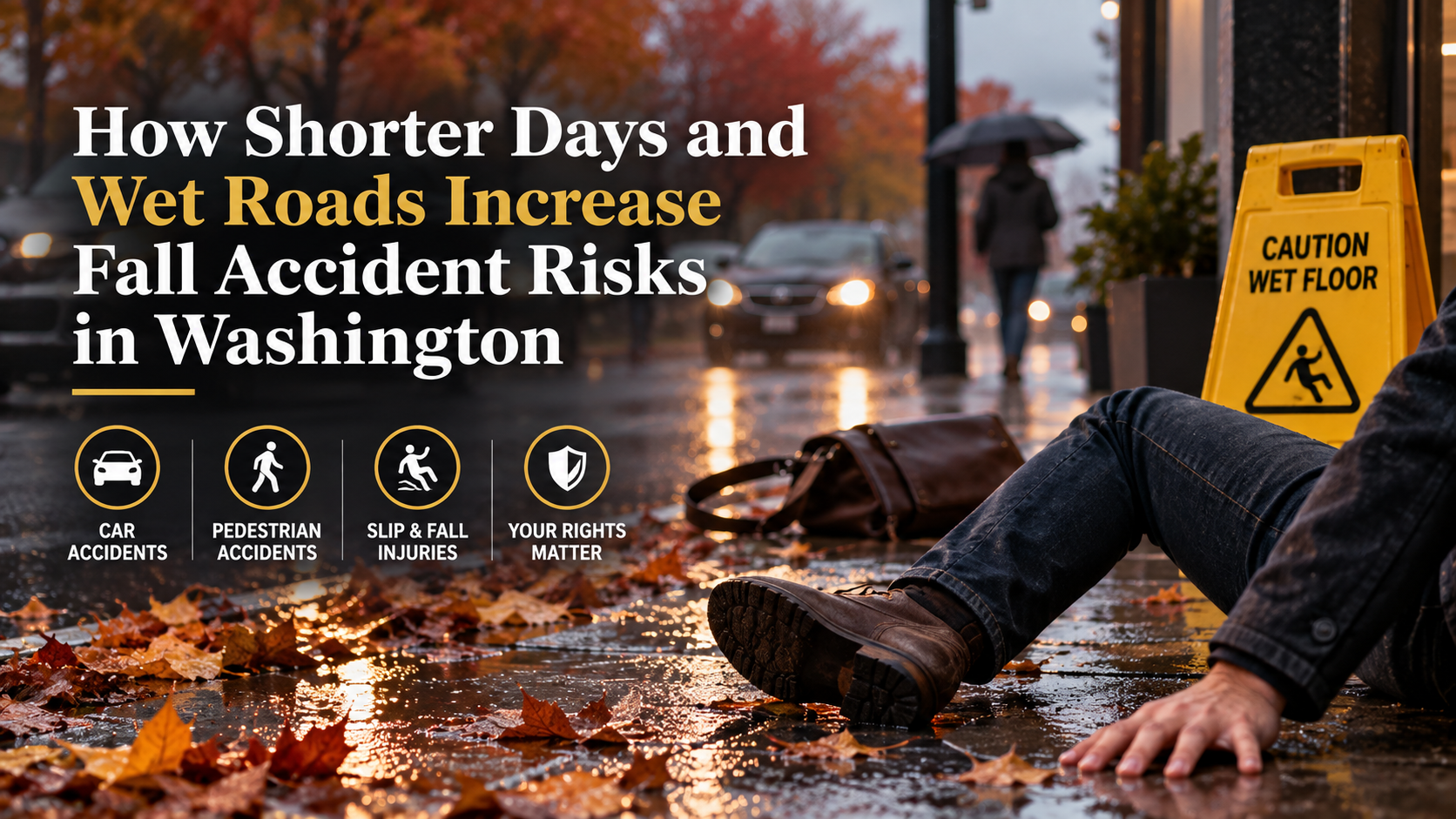
Fall brings cooler temperatures, earlier sunsets, and more frequent rain across Washington. These seasonal changes can create additional risks for you when you are driving, walking, cycling, or visiting someone else's property.
Wet roads can reduce traction and visibility, while fallen leaves and rainwater can make sidewalks, stairs, and parking lots slippery. Shorter daylight hours can also make it harder for drivers to see pedestrians and other hazards.
Weather alone does not automatically determine who is responsible for an accident. If you are injured because another driver or property owner failed to take reasonable precautions, you may have the right to seek compensation for your injuries and losses.
Why Do Fall Conditions Increase Accident Risks?
As daylight decreases and rain becomes more common, you may encounter hazards that are less common during the summer. Drivers, pedestrians, and property owners all need to respond appropriately to changing conditions.
Shorter Days Can Reduce Visibility
During fall, your morning and evening travel may take place in low-light conditions. Reduced visibility can make it harder for drivers to see pedestrians, cyclists, motorcyclists, road debris, and other hazards.
This can become especially dangerous near:
- Crosswalks
- School zones
- Residential neighborhoods
- Parking lots
- Intersections
- Construction areas
Drivers should adjust their speed and remain alert when visibility is limited. Failing to do so may contribute to a pedestrian or vehicle accident.
Rain Can Make Roads More Dangerous
Wet pavement can reduce tire traction and increase the distance needed to stop. Standing water may also create a risk of hydroplaning, particularly when a driver is traveling too quickly for the conditions.
Rain can contribute to:
- Reduced visibility
- Longer stopping distances
- Loss of traction
- Hydroplaning
- Skidding
- Rear-end collisions
If another driver fails to adjust their driving to these conditions and causes your accident, the weather itself does not necessarily eliminate their responsibility.
How Can Wet Roads Affect Car Accident Liability?
Rain does not automatically make a car accident unavoidable or leave everyone without fault. If you are injured in a crash, the circumstances surrounding the collision still matter.
Drivers Must Adjust to Road Conditions
Drivers have a responsibility to operate their vehicles safely based on the conditions they encounter. During heavy rain, reasonable precautions may include reducing speed, increasing following distance, using appropriate headlights, and avoiding sudden maneuvers.
A driver may contribute to an accident by:
- Speeding for the conditions
- Following too closely
- Driving while distracted
- Changing lanes carelessly
- Failing to maintain control
- Ignoring standing water
- Failing to account for limited visibility
Even if the weather contributed to the crash, another driver's negligence may still be an important factor in determining liability.
The Posted Speed Limit May Not Be Appropriate
You may assume that a driver is driving safely if they are following the posted speed limit. However, road conditions can require a driver to travel more slowly. Heavy rain, standing water, poor visibility, or slippery pavement may make the posted speed unsafe. If a driver fails to adjust to those conditions and causes a collision, their speed may become relevant to your claim.
Why Can Fall Weather Increase Pedestrian and Slip-and-Fall Accidents?
Fall conditions can affect you even when you are not behind the wheel. Wet sidewalks, fallen leaves, dark parking lots, and slippery entryways can create hazards for pedestrians.
Drivers May Have More Difficulty Seeing Pedestrians
A person wearing dark clothing can be difficult to see during early morning or evening hours. Rain and windshield glare can make visibility even worse. Drivers should use additional caution around crosswalks, intersections, schools, residential areas, and parking lots.
If a driver fails to notice you because they were distracted, speeding, or otherwise driving carelessly, those circumstances may be relevant to a pedestrian accident claim.
Wet Leaves Can Create Slip Hazards
Wet leaves can become surprisingly slippery when they accumulate on sidewalks, stairs, ramps, and parking areas. Combined with rainwater, moss, uneven pavement, or poor drainage, they may create dangerous walking conditions.
Property owners and businesses may have responsibilities to reasonably address known hazards on their premises. Whether a property owner is legally responsible depends on the circumstances, including the condition of the property and what the owner knew or should have known about the hazard.
What Should You Do After a Fall Weather Accident?
If you are injured in a car accident, pedestrian accident, or slip and fall, what you do afterward can affect both your recovery and your potential claim.
Document the Conditions
If you can safely do so, take photographs as soon as possible. Weather-related conditions can change quickly once rain stops, leaves are removed, or the area is cleaned.
Consider documenting:
- Wet roads or sidewalks
- Standing water
- Fallen leaves
- Poor lighting
- Vehicle damage
- Property conditions
- Traffic signs
- Visible injuries
You should also obtain witness information and keep copies of relevant accident and medical records.
Get Medical Attention
Some injuries may not be obvious immediately after an accident. Prompt medical attention can help identify injuries, begin treatment, and create documentation connecting your condition to the incident.Following your healthcare provider's treatment recommendations can also help demonstrate the nature and progression of your injuries.
How Can a Personal Injury Attorney Help?
Determining liability can become more complicated when weather conditions are involved. An insurance company may argue that rain, darkness, or slippery conditions caused your accident rather than another person's negligence.
A personal injury attorney can investigate the circumstances and help you understand whether another party may be legally responsible.
Your attorney may review police reports, photographs, witness statements, surveillance footage, medical records, weather information, property maintenance records, and other evidence.
If you are dealing with an insurance company, your attorney can also handle communications, respond to disputes about liability, document your losses, and negotiate for appropriate compensation.
How Floyd Personal Injury Law Group Can Help After a Fall Accident
When you are injured because of a car crash, pedestrian accident, or dangerous property condition, you deserve to understand your legal options. Floyd Personal Injury Law Group is a trusted Washington personal injury firm that helps injured clients pursue compensation after accidents caused by another party's negligence.
The firm represents clients in personal injury matters involving car accidents, pedestrian accidents, slip and fall accidents, motorcycle accidents, and other injury claims. Your legal team can investigate what happened, gather supporting evidence, communicate with insurance companies, and work to protect your interests throughout the claims process.
Because every accident is different, Floyd Personal Injury Law Group evaluates your circumstances individually and develops a strategy based on the evidence, your injuries, and the losses you have experienced.
Frequently Asked Questions
Why are fall accidents more common in Washington?
Shorter daylight hours, frequent rain, wet leaves, reduced visibility, and slippery walking surfaces can increase the risk of car accidents, pedestrian accidents, and falls.
Can rain make a driver responsible for an accident?
Rain alone does not determine liability. However, if a driver fails to adjust to wet or low-visibility conditions and causes a collision, their conduct may support a negligence claim.
Can wet leaves cause a slip and fall accident?
Yes. Wet leaves can become slippery and may contribute to a fall on sidewalks, stairs, parking lots, or other walking surfaces. Whether someone else is legally responsible depends on the circumstances.
What should you do after a weather-related accident?
Seek appropriate medical care, report the accident when necessary, document the scene if it is safe, gather witness information, and preserve medical and accident-related records.
When should you speak with a personal injury attorney?
If you were injured and believe another driver, property owner, or other party may have contributed to your accident, speaking with a personal injury attorney can help you understand your legal options.
Final Thoughts
Shorter days and wet weather can make fall travel more hazardous throughout Washington. Reduced visibility can make pedestrians harder to see, while rain and fallen leaves can make roads, sidewalks, stairs, and parking areas slippery.
However, weather does not automatically determine liability. If another driver or property owner failed to take reasonable precautions and you were injured as a result, the circumstances may support a personal injury claim.
If you are hurt in a fall-related accident, prioritize your medical care, preserve evidence, and understand your legal options. Floyd Personal Injury Law Group can help you evaluate your situation and pursue the compensation you may be entitled to under Washington law.