How Winter Weather Can Affect Liability After a Washington Car Accident
How Winter Weather Can Affect Liability After a Washington Car Accident

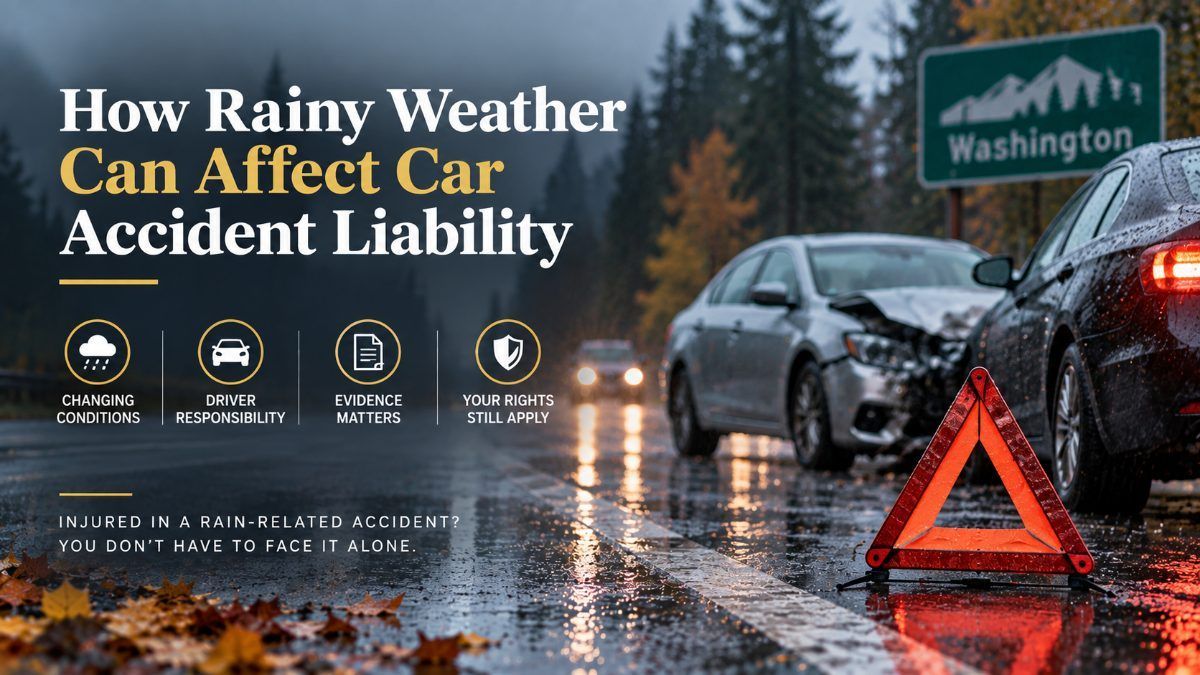
Winter weather creates some of the most hazardous driving conditions in Washington. Snow-covered roads, black ice, freezing rain, fog, and shorter daylight hours can make even routine trips more dangerous. Although weather can increase the likelihood of a crash, it does not automatically determine who is responsible. Drivers are expected to adjust their driving to match changing road conditions, and failing to do so may result in liability if an accident occurs.
Many winter accidents involve disputes over fault because insurance companies may argue that the weather, not driver negligence, caused the collision. However, Washington law focuses on whether each driver acted with reasonable care under the circumstances. Understanding how winter weather affects liability can help you protect your rights if you are injured in a car accident.
Does Winter Weather Automatically Affect Liability?
Many drivers believe that snow or ice automatically means no one is at fault after a collision. While winter weather certainly makes driving more difficult, it rarely excuses careless driving. Investigators look at the actions of everyone involved to determine whether the accident could have been prevented.
Liability depends on whether a driver acted reasonably despite the weather conditions.
Drivers Must Exercise Greater Caution
Winter weather requires drivers to be more careful than they would be on dry roads. Safe driving means adjusting your speed and driving habits to match current conditions.
Drivers should:
- Reduce their speed.
- Increase following distance.
- Brake gradually.
- Accelerate slowly.
- Use headlights when visibility is poor.
- Stay alert for icy patches.
Ignoring these precautions may increase the likelihood of being found at fault after a collision.
Weather Does Not Excuse Negligence
Insurance companies often investigate whether a driver failed to adapt to winter conditions.
They may examine whether the driver:
- I was speeding.
- Followed another vehicle too closely.
- I was distracted.
- Failed to maintain control.
- Ignored hazardous road conditions.
- Attempted unsafe lane changes.
Even during severe weather, negligent driving can still lead to liability.
How Winter Weather Makes Driving More Dangerous
Winter creates several hazards that affect how vehicles stop, turn, and respond to driver input. Even experienced drivers can lose control when roads become icy or snow-covered.
Understanding these conditions helps explain why extra caution is necessary.
Snow and Ice Reduce Traction
Snow and ice reduce the grip between your tires and the road.
This may cause:
- Longer stopping distances
- Sliding during turns
- Difficulty accelerating
- Skidding
- Loss of steering control
- Vehicles drifting into other lanes
Drivers should reduce speed whenever traction is reduced.
Black Ice Creates Hidden Dangers
Black ice is especially dangerous because it is often difficult to see.
It commonly forms on:
- Bridges
- Overpasses
- Curves
- Shaded roads
- Untreated intersections
- Residential streets
Drivers should assume icy conditions are possible whenever temperatures approach freezing.
How Is Fault Determined After a Winter Car Accident?
Insurance companies do not determine liability based solely on weather conditions. Instead, they investigate how the accident happened and whether each driver acted responsibly.
Evidence plays an important role in determining fault.
Evidence Used During an Investigation
Several types of evidence may help establish liability after a winter crash.
Investigators often review:
- Police reports
- Photographs of the accident scene
- Vehicle damage
- Dash camera footage
- Traffic camera video
- Witness statements
- Weather reports
- Road condition reports
- Accident reconstruction findings
Together, this evidence helps explain why the collision occurred.
Driver Decisions Often Determine Liability
Although winter weather creates dangerous conditions, driver behavior frequently determines fault.
Investigators may consider whether a driver:
- Was driving too fast for the conditions.
- Failed to maintain a safe following distance.
- Ignored poor visibility.
- Braked aggressively on icy roads.
- Failed to yield.
- Was distracted while driving.
These actions often have a greater impact on liability than the weather itself.
Can More Than One Driver Share Responsibility?
Some winter weather accidents involve mistakes by more than one driver. In these situations, liability may be shared.
Washington follows a pure comparative fault rule, meaning multiple drivers can each be assigned a percentage of responsibility.
Understanding Comparative Fault
Comparative fault allows each driver's actions to be evaluated separately.
For example:
- One driver may have been speeding.
- Another driver may have followed too closely.
- Both drivers may have failed to slow down for icy roads.
Each driver's percentage of fault may affect the compensation they are able to recover.
Other Conditions May Also Be Investigated
Weather is not the only factor investigators consider.
Additional issues may include:
- Poor road maintenance
- Snow-covered lane markings
- Untreated intersections
- Standing water that froze
- Malfunctioning traffic signals
- Vehicle maintenance problems
These factors may contribute to an accident, but they do not automatically remove driver responsibility.
What Should You Do After a Winter Weather Accident?
The steps you take immediately after an accident can affect both your recovery and your personal injury claim. Winter conditions often change quickly, making early documentation especially valuable.
Acting promptly can help preserve important evidence.
Protect Your Safety First
Your health and safety should always come first after a collision.
If possible:
- Move to a safe location.
- Call 911 if anyone is injured.
- Report the accident to law enforcement.
- Seek medical attention promptly.
Even low-speed crashes on icy roads can result in injuries that are not immediately noticeable.
Document the Accident Scene
Winter weather can quickly change road conditions, making photographs especially helpful.
If it is safe, collect:
- Photos of vehicle damage
- Snow or ice on the roadway
- Tire tracks
- Traffic signs
- Weather conditions
- Road conditions
- Visible injuries
- Witness contact information
This evidence may become valuable during an insurance claim.
How Can a Personal Injury Attorney Help?
Winter weather accidents often involve complicated liability disputes. Insurance companies may argue that snow or ice caused the collision instead of another driver's negligence.
An experienced attorney can investigate the accident and help build a strong claim supported by evidence.
Investigating the Cause of the Accident
A detailed investigation helps determine whether another driver failed to use reasonable care.
An attorney may review:
- Police reports
- Medical records
- Witness statements
- Surveillance footage
- Dash camera videos
- Weather reports
- Road maintenance records
This evidence helps establish what happened before the collision.
Negotiating With Insurance Companies
Insurance companies often attempt to reduce payouts after weather-related accidents.
A personal injury attorney can help by:
- Communicating with insurance adjusters
- Organizing supporting evidence
- Responding to liability disputes
- Calculating accident-related damages
- Negotiating a fair settlement
- Preparing the case for litigation if necessary
Professional representation can help ensure your claim receives careful consideration.
How Floyd Personal Injury Law Group Supports Injured Clients
Winter weather accidents can leave injured victims facing medical bills, lost wages, and uncertainty about who is responsible for the crash. Floyd Personal Injury Law Group helps injured clients understand how Washington law applies to weather-related accidents and explains how liability is evaluated.
The firm works with clients to investigate the accident, gather police reports, medical records, witness statements, photographs, and other evidence that supports their claim. Careful preparation helps present a clear picture of how another driver's negligence may have contributed to the collision.
Every accident is different. Floyd Personal Injury Law Group evaluates each case individually, communicates with insurance companies on behalf of clients, and works to pursue fair compensation based on the specific facts and available evidence.
Frequently Asked Questions
Does winter weather automatically make a driver less responsible for an accident?
No. Drivers are expected to adjust their driving for snow, ice, and other hazardous conditions. Winter weather alone does not eliminate liability.
Can a driver be at fault for driving too fast during snowy conditions?
Yes. A driver may be considered negligent if they fail to reduce their speed for winter road conditions, even if they were driving below the posted speed limit.
What evidence is important after a winter weather accident?
Helpful evidence includes police reports, photographs, witness statements, dash camera footage, weather reports, road condition reports, and medical records.
Can both drivers share responsibility for a winter car accident?
Yes. Washington follows a pure comparative fault system, which allows liability to be divided if more than one driver's actions contributed to the collision.
Should I contact a personal injury attorney after a winter weather accident?
If you suffered injuries or liability is disputed, a personal injury attorney can explain your legal rights, investigate the accident, and help you pursue compensation.
Conclusion
Winter weather creates challenging driving conditions throughout Washington, but snow, ice, and freezing rain do not automatically determine who is responsible for a car accident. Drivers are expected to reduce their speed, increase following distances, and adjust their driving to match changing road conditions. When they fail to take these precautions, they may still be held liable for the injuries and damages that result.
If you are injured in a winter weather accident, seeking prompt medical care, preserving evidence, and documenting the accident scene can strengthen your claim. Understanding how liability is determined during winter conditions can help you protect your legal rights and pursue the compensation you may be entitled to recover under Washington law.